Manufacturing
Procure-to-Pay Automation for Manufacturing
Reduce the manual work behind purchasing, supplier management and invoice processing — while giving finance clearer control over approvals, liabilities and spend across plants, sites and business units.
Where RapidP2P creates value for manufacturing finance teams
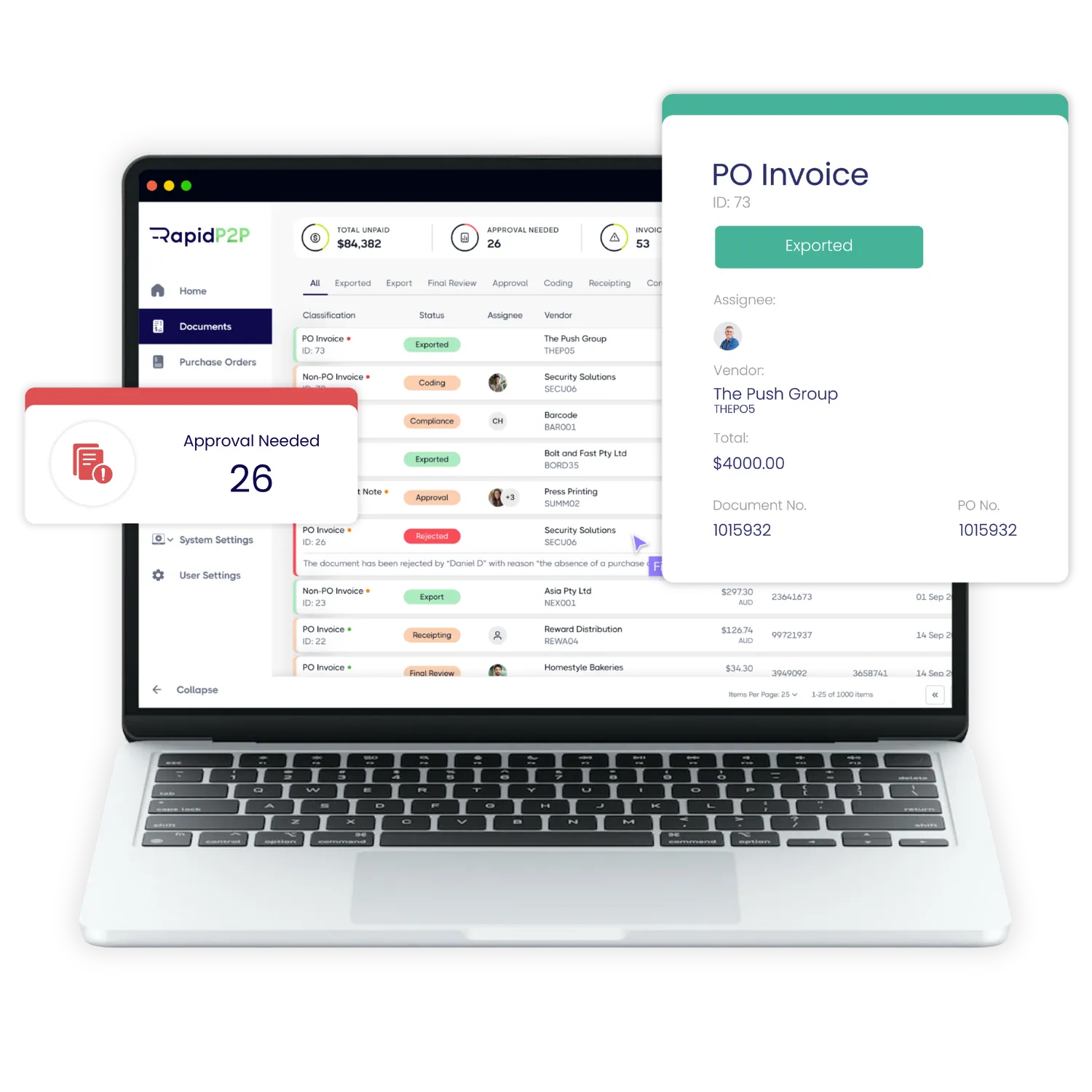
Manufacturing AP becomes harder to manage as invoice volumes, suppliers, purchase orders and operating locations grow. RapidP2P brings these processes into a more controlled workflow — reducing manual work while improving visibility and financial control.
Process more invoices with less manual work
Match POs, receipts and invoices more efficiently
Stop duplicates and errors before payment
Apply validation and duplicate checks earlier in the process to reduce incorrect payments, rework and avoidable financial risk.
Strengthen supplier and payment controls
Reduce the cost of running AP
See what Finance needs to act on
How RapidP2P Suite helps
Connect supplier setup, purchasing and accounts payable workflows so Finance has a clearer process from request through to payment readiness.
Accounts Payable Automation
Procurement
Vendor Portal
Vendor Onboarding
eInvoicing
Seamless Integration with your ERP
Improve procure-to-pay without replacing the finance systems your manufacturing organisation already depends on. RapidP2P connects workflows, approvals and invoice data with your existing ERP environment.
customer stories
What finance teams say about RapidP2P
Port Of NewCastle
Twin Towns
Moorabool shire council
Low-commitment next step
Not ready for a full demo?
Start with a Short AP Assessment
Manufacturing AP Automation FAQs
How can manufacturers reduce manual processing of supplier invoices?
RapidP2P automates invoice capture, data extraction, validation and approval routing, reducing repeated entry and handling of emailed invoices. Finance can review invoice status and exceptions in the platform, directing attention to discrepancies rather than giving every invoice the same manual treatment across factories, warehouses and offices.
Can AP automation handle both PO and non-PO manufacturing invoices?
Yes. RapidP2P Accounts Payable Automation supports purchase-order matching alongside coding and approval workflows for non-PO invoices. This allows PO-backed purchasing and overhead expenses to follow appropriate checks and approval paths, rather than forcing different types of invoices through an identical process.
How are discrepancies between supplier invoices and purchase orders handled?
RapidP2P supports two-way PO matching and tolerance-based validation. Missing or incorrect PO references and differences outside configured tolerances can be routed for review. Finance can investigate these discrepancies before approved invoice data is exported to the ERP, reducing reliance on manual comparisons.
What is the difference between two-way and three-way invoice matching?
RapidP2P supports both two-way and three-way matching. Two-way matching compares an invoice with its purchase order. Three-way matching also checks goods-receipt information to help establish whether invoiced quantities were received. The required matching rules, receipt data and handling of partial deliveries should be confirmed for your proposed RapidP2P and ERP integration.
Can invoice approvals reflect responsibilities across factories and warehouses?
Yes. RapidP2P can mirror how your operation is actually run, whether that’s factories, warehouses, regional offices, or a head office sitting over all of them. Approval responsibilities follow that same structure, so finance gets one consistent view of invoice progress across every site without losing local accountability.
Can AP automation work alongside our manufacturing ERP and production systems?
Yes. RapidP2P is designed to support purchasing and accounts payable alongside existing ERP systems, not replace production planning or inventory management. The implementation defines how supplier, purchasing and approved invoice data connect with your systems, based on the workflows and integration requirements in scope.
Can we introduce purchasing controls before manufacturing invoices arrive?
Yes. RapidP2P Procurement supports purchase requests, purchase-order creation and approvals before buying takes place. This makes purchasing responsibility visible earlier and creates an approved record for subsequent invoice checks, rather than introducing the first control only when a supplier invoice reaches finance.
What should manufacturers test in an AP automation demonstration?
Use real PO and non-PO invoices, duplicate submissions, supplier discrepancies and approvals across sites. Where goods receipts, partial deliveries or line-level matching matter, ask the provider to demonstrate those scenarios with your ERP requirements. Test both routine invoices and exceptions, including who must resolve each issue.